

Why Doesn’t a Dental Implant Always Integrate?
Causes, Early Warning Signs and Modern Prevention Methods — Prepared for EndoExpert Katowice
Dental implant placement is one of the most modern and predictable methods of restoring missing teeth. At EndoExpert Katowice, we use technologies that allow us to perform the procedure with exceptional precision while ensuring patient comfort and fast healing.
Despite advanced techniques, there are situations in which an implant does not properly integrate with the bone. This topic raises many questions, which is why we prepared a detailed article explaining:
-
what it actually means when an implant “fails to integrate,”
-
the clinical and biological reasons behind this,
-
which symptoms should prompt a consultation,
-
what steps we take at EndoExpert to minimise the risk of implant failure,
-
what can be done when osseointegration does not progress as expected.
1. What Does “Lack of Implant Integration” Mean?
After placement, a dental implant is not yet ready to be loaded. It first needs to fuse with the bone — a process known as osseointegration. During this process, new bone cells form and attach to the implant surface, stabilising it within the jaw.
If this process is interrupted, the bone cannot create a strong enough structure. The implant may begin to show micromovements, trigger inflammation, or simply fail to function.
At EndoExpert, we monitor healing through follow-up X-rays and stability tests, allowing us to detect problems at the earliest possible stage.
2. What Causes Implant Integration Problems? Key Factors
Every case of failed integration has an underlying reason — biological, mechanical or a combination of both.
2.1. Insufficient Bone Quantity or Quality
An implant requires stable surrounding bone to integrate properly. If the bone is weak, resorbed or too thin, the body may not be able to form a durable connection.
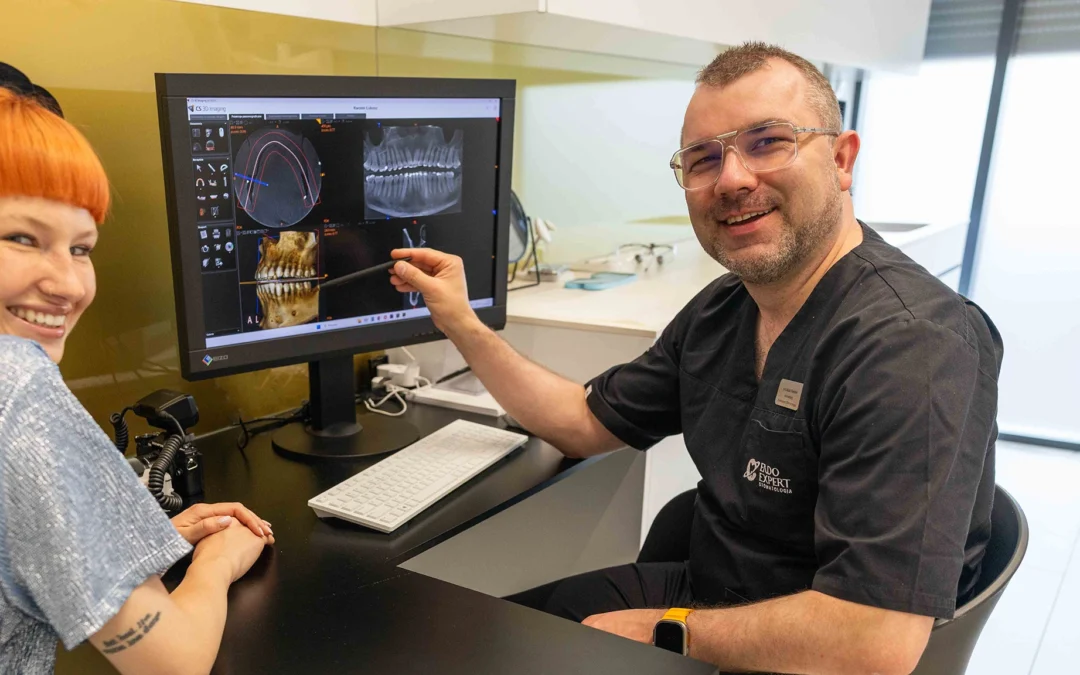
At EndoExpert, every implant procedure is preceded by CBCT imaging, which allows us to evaluate bone volume and density with sub-millimetre precision.
If bone is insufficient, we rebuild it before or during implant placement.
2.2. Mechanical Overload
One of the most overlooked causes. If an implant is overloaded before it has fully fused, micromovements may disrupt the healing process.
Overload can result from:
-
heavy biting forces,
-
bruxism,
-
incorrect bite (malocclusion),
-
poorly designed prosthetic restoration.
At EndoExpert, we verify occlusal contacts after crown delivery to ensure the implant functions under physiological loads.
2.3. Infection Around the Implant
Infection is one of the most serious risk factors. Even a minor bacterial contamination may lead to peri-implantitis, causing progressive bone loss.
The most common sources of infection include:
-
poor oral hygiene,
-
untreated inflammatory lesions elsewhere in the mouth,
-
insufficient cleaning around the implant,
-
micromovements causing tissue irritation.
This is why implant treatment at EndoExpert is always combined with full-mouth evaluation, including restorative and endodontic management.
2.4. Reduced Healing Capacity
Some systemic conditions and medications may negatively affect bone formation, including:
-
uncontrolled diabetes,
-
osteoporosis,
-
autoimmune diseases,
-
long-term steroid therapy,
-
blood clotting disorders.
This is why our qualification process includes a thorough medical interview.
2.5. Smoking
Smoking disrupts healing at nearly every stage of implant therapy. Nicotine reduces blood flow, limits oxygen supply, increases infection risk and accelerates bone loss.
Statistics show that smokers have up to twice the risk of implant complications.
2.6. Technical Errors or Inaccurate Planning
Modern implantology minimises this risk, but incorrect angulation, positioning, or implant size may compromise healing.
For this reason, EndoExpert uses only:
-
digital 3D planning,
-
CBCT analysis,
-
computer-guided surgical planning,
-
surgical guides,
-
premium implant systems.
3. How to Recognise That an Implant May Not Be Integrating?
Early signs are often subtle — hence the importance of regular follow-ups. The symptoms below may require additional diagnostics.
Early symptoms (first weeks):
-
persistent or increasing pain,
-
swelling that does not subside,
-
redness of the surrounding tissues,
-
discharge or unpleasant odour,
-
slight mobility.
Late symptoms (after months):
-
discomfort while chewing,
-
gum recession around the implant,
-
loosening of the abutment screw or crown,
-
deterioration of gum aesthetics,
-
bone loss visible on control X-rays.
At EndoExpert, we also assess implants under a microscope — microscopic inspection often reveals early inflammation not visible to the naked eye.
4. How We Ensure Successful Integration at EndoExpert
4.1. Precise Diagnostics and Planning
We begin with CBCT, intraoral scanning and digital design, which allow us to understand:
-
the surrounding anatomical structures,
-
the amount and quality of bone,
-
occlusal forces after restoration,
-
which implant size and system will be ideal.
4.2. Modern Implant Systems
We use implants with advanced surface modifications that accelerate bone formation and improve primary stability — crucial for immediate or early loading cases.
4.3. Minimally Invasive Surgical Technique
Reducing surgical trauma leads to lower infection risk and smoother healing. Our precision tools enable atraumatic implantation.
4.4. Occlusal Control and Prosthetic Design
At EndoExpert, prosthetic restorations are digitally planned and adjusted so that:
-
chewing forces are evenly distributed,
-
the implant is never overloaded,
-
no micromovements occur,
-
the emergence profile supports healthy tissues.
This step is critical — even a perfectly placed implant can fail if the prosthetic crown is poorly designed.
4.5. Comprehensive Post-operative Care
Patients receive detailed instructions, and follow-up visits follow an individual schedule. We also focus on maintaining hygiene around the implant after crown delivery.
5. What Can Patients Do to Support Implant Success?
Although surgical success depends on the clinician, patient compliance is equally important. Recommended actions include:
-
avoiding smoking for at least several weeks post-surgery,
-
maintaining excellent oral hygiene,
-
avoiding chewing on the implant until fully integrated,
-
reporting any discomfort,
-
professional cleaning every 6 months,
-
maintaining overall health (glucose control, immunity, supplementation).
6. What If the Implant Does Not Integrate?
Failed integration does not eliminate the possibility of future implant treatment. Most cases require:
-
removal of the implant,
-
cleaning the surgical site,
-
bone regeneration if necessary,
-
re-implantation after healing.
At EndoExpert, we always determine the underlying cause and select a new protocol to ensure the next procedure is fully successful.
FAQ – Most Common Questions About Implant Integration
-
Can an implant fail without symptoms?
Usually there are subtle signs, but sometimes only X-ray imaging reveals the problem. -
Are implants long-lasting?
Yes — with proper hygiene, an implant can last for decades. -
Does smoking significantly affect implant success?
Yes — it’s one of the major risk factors for complications. -
When can you chew normally again?
After full osseointegration, typically 3–6 months. -
Is bruxism a contraindication?
No, but a protective night guard is required. -
Are dental implants safe?
Yes — implantology is one of the most thoroughly researched fields in dentistry. -
What does implant mobility mean?
It indicates a lack of stability and requires immediate examination. -
Can implants be placed in areas with severe bone loss?
Yes — after proper bone regeneration. -
Can an implant hurt after many years?
Only in cases of inflammation or mechanical overload. -
Do chronic illnesses exclude implant treatment?
No — but they require proper preparation and monitoring.